We present a concept of social enterprise/social entrepreneurship based in Mollo, Timor and utilize the natural and cultural potential for economic improvement as well as the empowerment of local communities, particularly young people. Our focus includes literacy, art-culture and the creative economy. This project involves the youth community, village library as a center for arts and culture, homestay and creative economy. It is located in Jl. Kampung Baru, No. 2, Village of Taeftob, District of North Mollo, South Central Timor, East Nusa Tenggara, Indonesia 85552. Telp./Whatsapp 081338037075. E-mail: lakoat.kujawas@gmail.com.

Tampilkan postingan dengan label sosial enterprise. Tampilkan semua postingan

Kamis, 04 Oktober 2018

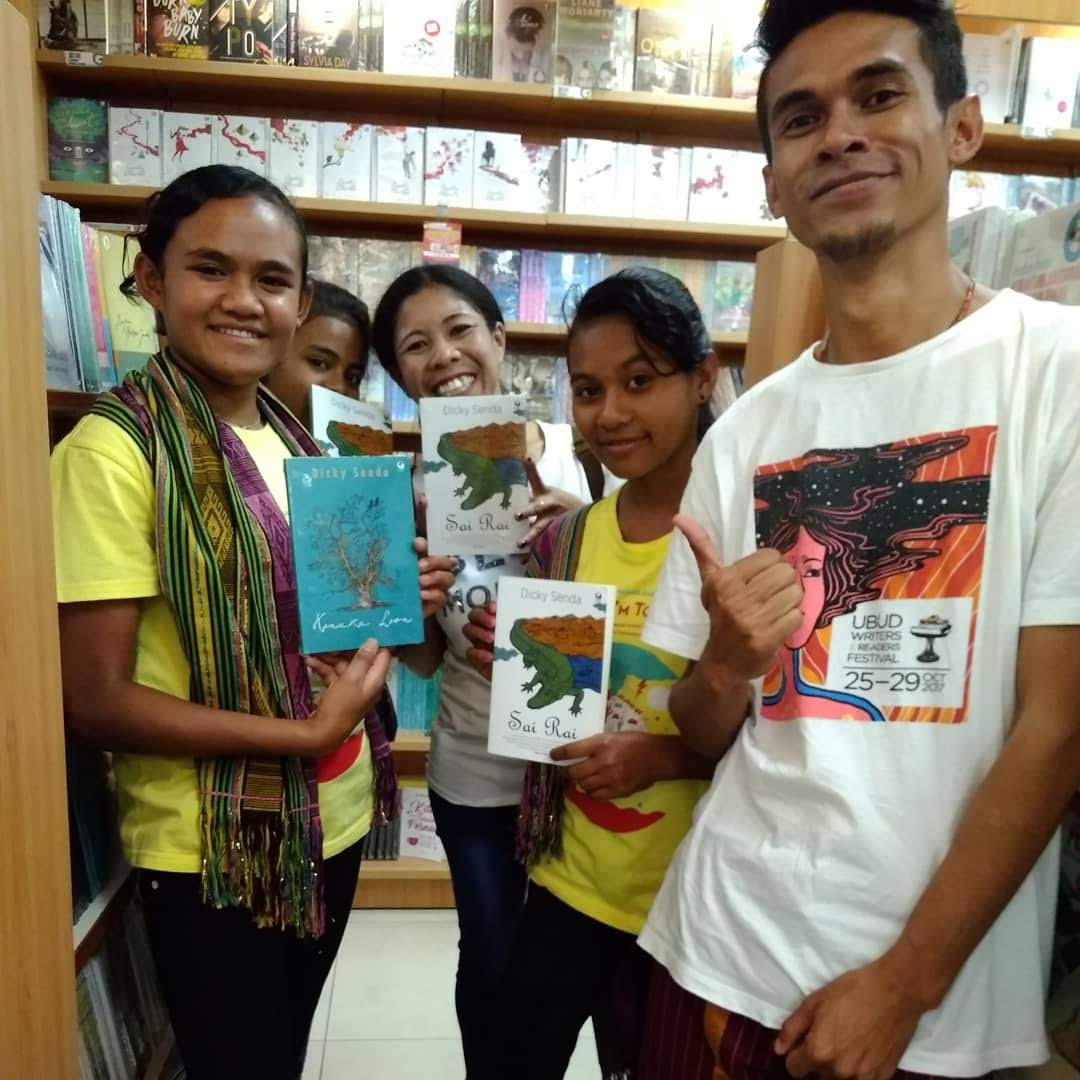
Diskusi dan Peluncuran Buku Dongeng Dari Kap Nam To Fena di Kupang

Satu langkah terlampaui, seribu langkah menanti. Cerita kerja kolaborasi komunitas Lakoat.Kujawas dan SMPK St Yoseph Freinademetz desa Taiftob Kapan di Pos Kupang hari ini. Kami juga punya komitmen dan kolaborasi bersama kelompok petani organik (kebanyakan perempuan), kelompok tenun, sebentar lagi bersama orang muda yang ingin belajar anyam bambu. Kelak, di desa kecil bernama Taiftob, ekosistem warga aktif terbentuk dengan baik, menempatkan anak dan orang muda sebagai titik tengah. Sebagai komunitas warga yang inklusif, yang bermitra dengan pemerintah desa, gereja dan sekolah.

Terima kasih Romo @amanchefrank, teman-teman komunitas Sastra @dusunflobamora, teman-teman SMP Lentera dan SMPK St Yoseph Naikoten. Acara diskusi buku Dongeng dari Kap Na'm To Fena karya siswa SMPK St Yoseph Freinademetz desa Taiftob Kapan berlangsung seru. Terima kasih juga untuk Romo Jimmy Kewohon kepala sekolah yang sudah banyak memberi ruang kreatif untuk kami semua. 


Selasa, 20 September 2016

Suatu Hari Minggu di Mollo


Sherly Indrayanti

Sebagai penghuni apartemen, setiap pagi saya bangun dengan bantuan bunyi alarm hp yg minimal saya snooze sebanyak 3x. Ketika bangun yang saya dengar seringnya suara klakson mobil-mobil yang antri mengantar anak-anak ke sekolah di seberang apartemen saya. Meskipun tinggal di lantai yang cukup tinggi, suara-suara dari jalan raya depan tetap terdengar sampai ke kamar tidur.

Pagi itu hari Minggu pertama di bulan September, bulan yang awalan katanya sama dengan nama saya. Bunyi ayam berkokok mendahului bunyi alarm hp yang sengaja saya pasang supaya saya tidak ketinggalan matahari terbit. Ayam pun berkokok bersahut-sahutan seperti bunyi alarm yang tidak bisa di snooze. Semesta memang selalu punya caranya sendiri untuk bersinergi dengan manusia.
Berjalan sedikit ke belakang rumah Dicky Senda tempat saya menginap, lalu kami nangkring untuk menyapa balik matahari yang setiap pagi tidak pernah absen menyapa kita (terkadang matahari mengalah pada awan dan hujan, bukan karena dia malas, tapi karena dia juga harus berbagi panggung).


Matahari pagi itu awalnya malu-malu tapi kemudian menyembul keluar dengan gagah berani. Seperti biasa, karena suka kurang preparasi dan mudah teralihkan, dengan batere kamera yang sekarat saya masih sibuk foto ini itu kayak anak norak (emang norak). Waktu matahari sedang gagah-gagahnya menampakan diri, batere kamera pun habis dan saya terpaksa untuk menggunakan kamera hp utk memotret momen yang ditunggu itu. Saat-saat seperti ini lah yang melatih kita untuk berdamai dengan diri sendiri termasuk memaafkan kebodohan sendiri.

Di desa ini, mayoritas warganya adalah Nasrani, sehingga di hari Minggu pagi sudah terdengar suara lonceng-lonceng gereja. Dicky ikut misa bersama Bapak dan saya ikut ibadah Minggu bersama Ibu di GMIT Ebenheizer, lima menit berjalan kaki dari rumah mereka. Ibadah berlangsung tertib dan hampir semua jemaat masih membawa Alkitab di tangannya, kecuali saya yang membawanya dalam bentuk aplikasi. Saya sangat menikmati suasana Ibadahnya dan merasa terberkati di tengah sebuah kesederhanaan.

Sepulang gereja, saya pun memulai petualangan bersama Dicky Senda, yang selain sebagai pemilik Lakoat.Kujawas, juga menjadi guide di hari itu. Kami jalan menyusuri sungai Sebau menuju Kampung Noebesi dan Manesat Anin, untuk bertemu dengan para mama penenun dan panen hasil kebun bersama warga.

Perjalanan ditempuh selama kurang lebih 2 jam dengan diselingi sesi berfoto di beberapa spot dan makan siang di tepi sungai. Dicky ternyata masih sempat memasak pagi itu dan membawa bekal utk makan siang kami. Makan nasi dengan lauk pauk sederhana dan sambal luat, di bawah langit biru sambil diiringi suara aliran sungai. Inilah yang disebut sebagai kemewahan dalam hidup.
Belajar tenun
Kami pun tiba di desa Noebesi, di sambut Mama Mina yang kemudian menemani kami berjalan sampai ke tempat Mama Via. Salah satu ciri khas di Timor adalah membawakan sirih dan pinang untuk orang yang dijunjungi. Dicky juga berpesan supaya saya mau belajar makan sirih pinang kalau ditawari (sonde boleh menolak). Siang itu pertama kalinya mengunyah pinang diikuti sirih dan kapur. Menurut Dicky, kalau salah teknik mengunyahnya, pinang bisa memabukkan. Dan saya pun berhasil. Yeayy!! Belajar hal-hal baru memang selalu menyenangkan, sesederhana apa pun itu :)

Dari Noebesi kami lanjut ke Manesat Anin ditemani Mama Via, Mama Mina, dan anak-anak (saya sudah tanya satu per satu namanya tapi belum hafal semua) Di sana, kami dijamu dengan singkong kapok dan jagung bose yang dipanen langsung dari kebun warga setempat. Lalu siang yang mulai terik itu pun dilengkapi dengan sejuknya air kelapa yang dipetik langsung dari pohon. Jefry adalah jagoan kami hari itu, karena dia yang menyodorkan diri untuk memanjat pohon kelapa.

Menjelang sore, kami pamit untuk kembali ke Taeftob sebelum gelap menjemput kami di perjalanan. Tetiba saya membayangkan perjalanan menyusur sungai dengan jalan berbatu yang tadi kami lewati dan meragukan diri sendiri apakah masih sanggup menempuh jalan pulang. "Andai ada jalan pintas atau ada kendaraan yang menjemput ke sini", begitu gumam saya dalam hati. Sayangnya, tidak ada pilihan lain. Berani berangkat ya harus siap pulang. "Semua hal dalam hidup ini ada ongkosnya, toh? Termasuk kebahagiaan!"
Panen ubi kapok bersama mama Via
Namun rupanya, semesta mendengar gumaman saya itu. Empat bocah dari Noebesi menemani kami berjalan sampai ke mulut sungai yang adalah 97% perjalanan. Di jalan bertemu dengan beberapa anak remaja yang juga akan kembali ke asrama sekolah di Kapan. Perjalanan jadi ramai diiringi tawa riang para bocah. Sesekali (baca:sering) ketika saya kesusahan menyeberang sungai, mereka sibuk menata bebatuan supaya saya bisa menyeberang sungai tanpa harus membuka sepatu. Di saat lain ketika harus terpaksa membuka sepatu dan berjalan di bebatuan tanpa alas kaki karena berdekatan dengan titik menyeberang berikutnya, mereka dengan suka rela meminjamkan sandal nya buat saya. Meskipun berlagak bak petualang, tetap saja saya anak perkotaan yang cupu menghadapi alam. Beberapa kali oleng ketika salah memilih batu pijakan. Untungnya saya tidak sampai terjatuh karena selalu ada saja tangan yang sigap memegang saya. Seringnya tangan itu adalah tangan Jefry, yang memang usianya sedikit lebih besar dibanding adik2 yang lain. Anak-anak ini adalah helikopter saya dan lagi-lagi, Jefry menjadi jagoan saya hari itu.

Perjalanan pulang yang awalnya saya pikir akan terasa lebih lambat dan menghabiskan energi, ternyata terlalui dengan lebih singkat. Keceriaan, kepekaan, dan ketulusan anak-anak Noebesi dan Maesat Anin menyisakan kehangatan yang teramat dalam di hati saya.

Saya berharap mereka semua bisa sekolah sampai tinggi dan bisa membangun desa nya. Saya justru tidak berharap mereka buru-buru mengenal internet. Biarlah mereka tumbuh alami tanpa percepatan, bermain dengan alam nyata sehari-hari yang bukan virtual. Ya Tuhan, jagalah mereka dalam tangan Mu.

***
bersama Keluarga Senda
Lakoat.Kujawas Homestay terletak di Jalan Kampung Baru, No. 2 Desa Taiftob Mollo Utara, Timor Tengah Selatan, NTT. Berjarak 130 km dari Kupang atau 18 km ke utara dari kota SoE. Untuk mencapai ke sini, Anda bisa naik travel dari Bandara El Tari, Kupang ke Kapan.

Berbeda dari Kota Kupang yang terik dan berdebu, Mollo merupakan daerah pegunungan yang sejuk dan asri. Tingkat polusi nya sangat rendah karena selain letaknya di pegunungan, alamnya hijau, sangat sedikit juga kendaraan yang lalu lalang sehari-hari. Air untuk mandi juga terasa sejuk di kulit. Setiba di sini, kepenatan (setelah hanya tidur 3 jam di malam sebelumnya, penerbangan 5 jam dari Jakarta, dan perjalanan 3.5 jam dari Kupang-Kapan dengan AC alam) seketika hilang.

Selama menginap, saya berkesempatan menikmati masakan rumah yang disiapkan langsung oleh Dicky Senda dan Mama Rika. Menu yang terhidang tidak pernah luput dari sayuran segar dan sambal lu'at. Campuran jeruk di setiap hidangan memberikan sensasi kesegaran tersendiri di lidah yang membuat saya selalu nambah dan lupa pada kata diet. Pilihan karbohidrat yang tersedia cukup bervariasi mulai dari beras merah, ubi atau singkong rebus, dan jagung bose kupas yang direbus bersama kacang-kacangan. Lauk yang cukup khas adalah lawar jantung pisang. Kebetulan Dicky senang berkreasi dengan bahan pangan lokal dan hasil olahannya selalu pas di lidah.

Mama Rika selalu bangun pagi-pagi dan langsung sibuk di dapur, sehingga begitu saya keluar kamar, di meja makan pasti sudah tersedia camilan ringan yang sangat pas untuk sarapan. Pisang goreng, kue cucur, sukun goreng, dan roti isi kelapa gula merah adalah aneka kreasi camilan buatan Mama Rika yang sempat saya nikmati. Selain pada bahan-bahan yang segar dan alami, kenikmatan makan di sini terletak pada sentuhan tangan Ibu yang membuat saya berasa di rumah.

Keramahan penduduk lokal juga merupakan salah satu faktor yang membuat saya betah di sini. Bukan sekedar ramah dan murah senyum, penduduk di sini selalu bertegur sapa satu sama lain ketika bertemu di jalan meskipun belum tentu hafal nama. "Mama! Bapa! Kakak!" Begitu kira-kira cara mereka saling menyapa. Cara bercakap-cakap dengan orang baru pun jauh dari kesan basa-basi sehingga menghadirkan keakraban tersendiri.
Ume Kbubu, rumah tradisional suku Dawan
Beberapa daya tarik wisata di Mollo antara lain Trekking Sungai Sebau menuju Desa Noebesi dan Manesat Anin, Belanja bahan pangan di Pasar Tradisional Kapan, Berkunjung ke Desa Fatumnasi, Air Terjun Oehala, dan Benteng Kote di Sebau. Mudah-mudahan saya berkesempatan datang lagi ke Mollo untuk menikmati tempat-tempat di atas.

Sebuah hari Minggu penuh makna, sebuah kado yang datang lebih awal di tahun ini. Terima kasih, Dicky Senda yang sudah memperkenalkan petualangan kecil ini. Dicky Senda, kawan baru saya ini, adalah seorang penggiat seni kelahiran Mollo yang memilih untuk pulang ke desanya untuk merintis kewirausahaan sosial di sana.

Penulis tinggal di Jakarta dan bekerja di UNDP

Mama Martha dari Noebesi

Anak-anak Kampung Noebesi


Belajar Makan Sirih Pinang
Anak-anak lembah Mollo

Bersama warga kampung Manesat Anin

Minggu, 11 September 2016

A Proud Atoin Meto

https://www.facebook.com/ThomasBenmetan
I was asked to write something about Timor based of my point view as an Atoin Meto who grew up in Timor Tengah Selatan, especially in Kapan, North Mollo. It is a very big pleasure of me to share about how proud  I am to be born as a Timorese. Many things to explain, but I will make it short why I and all the Timorese people should be proud for our homeland.
Firstly, I would talk about the land. Everything is still natural in Mollo, where you can easily breathe and feel the cold air without any doubt about how many poison that already filled your lungs. You may consider it as something exaggerate. But yeah, it’s true, even though it is still hard to find a good signal for your gadget, proper transportation and some other things that related to modern life.
Ume Kbubu
When I was a kid, I spent many time playing in the forest with friends. We made toys from what items that is available on us like newspaper, rubber band, trees, leaves, woods, can, bottle, rind and et cetera. And it was so amazing that I have ever experience that kind of childhood things. What I learn from my childhood is the importance of being connected with the nature. It taught us be more creative, to utilize everything around us for our own goods. 
The second thing is how I perceive Timorese people, which in Dawanese language we called “Atoin Meto.” Some people may consider that Timorese people are lazy, because when they woke up in the morning, the first thing that they do is sitting inside “Ume Kbubu” to warmth their body.  Yeah, true, but that is not what I want to talk about. The point is, Timorese people are very open with new things. Hundred years ago, many Chinese, Savunese, Bugis people, Muslims, Catholic, Rotenese and Flores people came to this island as merchants. Timorese people accepted them with an open hand and since that time they are peacefully living alongside one and another. Some of them married with Timorese, making families and having a good relation one and another without taking the diversity as a disaster. The proof of good assimilation and acculturation in Timor can be seen in Mollonese Monarchy where some of them are Chinese descent.
Want to know another example? Just come to Kapan, a small town in North Mollo during the time of Easter or Christmas celebration. You will see many Muslims (where most of them are Bugis descents from South Celebes) who participate in some of the celebration. They join the parade of Easter, they attend to many competition and blend with the atmosphere of Christmas or Easter. They celebrate it also without worrying to lose their faith.
Not only that.  You may consider to attend wedding party in Kapan. You will find that there will be a special dining table for Muslims, for they are prohibited to eat pork. The dining table for Muslims are served with dishes that contains halal food, which means that there will be no pork in their food. Isn’t amazing? Diversity proves peace.
Last but not least, the third thing that I want to share is I am so proud with the culture of Timorese people that is still preserve until this era. One of the Timorese philosophy is about how we regards the earth as like as we regards human body. It says that:
 “Nasi Fani on Nafus, Fatu Fani on Nuif, Afu Fani on Nesa, Oel Fani on Na’”
Which means: “The forest is our hair, the stone is our bone, the land is our flesh and the water is our blood.”  This philosophy proves how deep and how strong the relationship between human and Mother Nature. For Timorese people, earth is a mother, and they are her children. What they do is to protect their mother who is giving them life and provide everything that they need.   Timorese people respect the earth as like as they respect their body, and if one part of them is taken away, they are paralyzed. Nature and human cannot be separated. We life alongside, also depending on one and another.
Living in a small town called Kapan taught me to be someone with a strong will who is not easy to give up. My parents once told me to believe that it doesn’t matter where I came from, I have to prove that even I am from a small town that is lack on many things, I can stand as high as people who is living with prosperity. It motivates me to pursue my dream, yet I am not forgotten where I came from. Since high school I left my hometown, but I still remember what they said to me and what should I do for my hometown after I got the dream in my hand. Because wherever I go, I am still bringing my title as a Timorese, as an Atoin Meto who were born in a small town, near the river down the mountain. Mollo has taught me to dreams without limits. 
For those who has never been in Mollo, I do hope that my reflection could be a picture to you, to understand and to know more about Mollo. And for Atoin Meto who read this, be proud of who we are, and perceive everything in our motherland as a gift from God that we should responsible to keep it, to develop it while not leaving its roots. And do remember that“you can take a Timorese out of Timor, but you cannot take Timor out of a Timorese.”

Sincerely,


Thomas Benmetan


Minggu, 31 Juli 2016

Reflection As An Atoin Meto

www.twitter.com/sandrafrans
I was asked by Dicky, a closest friend of mine and also the founder of Lakoat Kujawas, to write something about Timor from a perspective of an Atoin Meto1 who is currently studying in Australia. Moving to Melbourne from SoE, South Central Timor, clearly makes me always comparing the situation here in there. My Taiwanese teacher at the University of Melbourne once said that for international students, being in a foreign country will make us to reflect a lot. Students do learn much about their country themselves when they are abroad. They will realise the uniqueness of things that used to be taken for granted in their home. I undoubtedly agree with him. Even until 1.5 years here, I still do reflections. I write some in my personal blogs as well. Because I am here not only to pursue my degree but also to learn about life, about people, and about nature. In this article, I will write about two personal thoughts linked to Lakoat Kujawas (future) projects.

The first one is the power of exchange knowledge. Last year, I lived in a flat with a senior lecturer of my university. He used to encourage me to attend many public lectures, held mostly by the university. He said, one of the nicest things you get in Melbourne is you will find it is so easy to access knowledge. All the public lectures are free. And it’s not only for students and staffs but it is open for public. I really enjoy to attend those seminars. Some are about health and public health. Some are about things that are not really related to my study, such as history, politics, physics and science. Even sometimes I couldn’t understand all contents. But it’s not the point to absorb all materials. It is about open my mind to all useful information and knowledge. Because at the end of the day, every thing is connected each other. For instance, you cannot speak about health services without involving the economic development. Moreover, by attending public lectures, I am just expanding my networks. I met a lot of incredible people from these events.

This free public lecture experience is a totally new for me. In Indonesia, there may no such thing as free (well, I am exaggerating things). But seriously, free seminar is really rare. I know a friend, who ever said that even if they want to hold a free seminar in a university, it takes so long and complicated bureaucracy. And probably sometimes they should pay for the room and for the permission.

I reckon that sharing knowledge is really important. This world is moving so fast. If we are not trying hard to catch valuable information, we are just left behind. By learning more and more everyday, it will open our mind, shape our perspective and make us a better person. And we don’t have to come to Melbourne to make it happens. We surely can do it now in Timor. In Forum SoE Peduli (a local non-profit organization in SoE), we have tried to start this idea of exchange knowledge. We ever made several seminars in various topics. And we will be more than happy to collaborate with Lakoat Kujawas. There are a lot of potential human resources from SoE. We can invite academics, practitioners, entrepreneurs, students, social workers, public servants, and public in general to come and discuss about one topic each meeting. Of course we also need people, who are expert in this topic to lead the conversation. So the talking will be based on evidence. The main point here is we learn from each other. It only needs commitment and consistency from the event makers. I think, this simple move will lead to a good change in the future.

The second reflection I want to share here is how Australian agencies make the most of their natural resources for example, tourism destinations. Couple months ago I traveled to Great Ocean Road (GOR) with a tour bus. GOR is on of the highlight tourism attraction in Victoria. It is a long road, built by world war veterans. The key destination of GOR is to see 12 Apostles, which are stones standing at the side of the oceans. Unfortunately, they are only seven or eight (but mind the catchy name, that actually not to connected with the history of the stones J). During the trip, we stopped at almost ten stops to take a rest or simply just take a picture. I cannot say it was an incredible journey though. But I really appreciate how they make each place becomes special. The access is really good. They provide explanation board in every stop, and even the driver bus is communicative. I learn some important things from him. Such as, how indigenous people think a Koala is an ‘evil’ creature, because Koalas always sleep, but they can alive. When I was at this trip, i remembered Timor island a lot. The beach scenery along the GOR journey was cool. But Kolbano beach scenery was cooler. When I saw the 12 apostles, I remembered the great Fatu’un at Kolbano. Fatu’un is much more enormous than these stones. And don’t forget all the giant stones at Fatumnasi. They are just so incredible. Our government just still doesn’t think it as a historical and great natural phenomenon.

Well, I might be wrong to make a comparison between the places. The place is never wrong, we are humans, who take responsibilities to these places may be. Here, Lakoat Kujawas (and all of the Atoin Meto) can play an important role to respect and to introduce our beautiful natural resources. However, let’s make it gentle. Don’t be too rush to over promote those innocent lands, forests, mountains, and beaches without a proper preparation. Because as we are all aware, they are so many greed people out there, who are secretly (or even really) looking at new territory for their own businesses. We obviously don’t want to be like the mainstream tourism destination in Indonesia, where the lands are owned by foreigners. So, let’s empower our local people to make them realise that we are so blessed with this nature. And it is us, who take responsibilities to sustain these resources. It is us who know our lands better.

I just want to add something about my GRO trip. When we arrived at those stops, I never saw the staff there. Almost all stops are free. Everyone can access it. And there is no staff who guard the place from (naughty) visitors who let’s say will write with marker ‘Sandra and Yosua, forever’ at the walls. So, basically, people can do whatever they want to do. The nice thing is there is (almost) no rubbish. The places are clean. They provide rubbish bins for sure. The walls, the benches, and everything are clean as well. And every tourist consciously takes care of their own rubbish. Well, I reckon it’s about habit. In Indonesia, we put attention seriously about cleanliness in our home. People even sweep every single leave at their ground. However, once they reach public areas or places that are not theirs, people do not care anymore. They throw away the candy wrap on the ground and so forth. So, the simple act we can do now is how to pay respect to our natural resources. We need to treat the land as our own home, and indeed this is our home. By doing this, we will feel more attach to this land, and it will lead us to be more ‘protective’. We then may feel the eager to learn more about our land. And then together we can empower our surroundings so in the future, it will become a beautiful tourism destination, powered by local people.

So, these are two points about living in Australia, from the academic side and also from the tourism side. When I read the proposal of Lakoat Kujawas projects, I saw hope. This is a dream that comes true, to see Timor from a new perspective, not a land full of social problems, but a land full of rich natural and human resources. Together we can enrich each other. I am looking forward for collaborating with Lakoat Kujawas in projects, such as public seminars, building library, travel promotions, or even in my area about health education. Keep moving forward!

Greetings from The cold, windy and rainy Melbourne.

(Sandra FransA medical doctor and an activist at Forum Soe Peduli, who is studying master of Public health, focusing on Women’s health and social science at the University of Melbourne)

1 Atoin Meto: (Dawanese language referring to people who come from Timor)

Rabu, 15 Juni 2016

Support Perpustakaan Desa Taeftob Mollo Utara

Dukung berdirinya perpustakaan warga di desa Taeftob, Kecamatan Mollo Utara, TTS dengan mendonasikan buku bacaan apa saja (kalau ada buku bacaan anak-anak dan buku terkait teknologi pertanian dan peternakan lebih oke lagi). Supaya anak-anak Mollo juga punya kesempatan untuk mengakses bahan bacaan selain bermain dan nonton TV. Dan para orang tua pun punya akses untuk mendapatkan informasi yang luas terkait dengan aktivitas harian mereka. 
Desa Taeftob sendiri terletak di kecamatan Mollo Utara, sebuah daerah di dataran tinggi dengan curah hujan yang cukup baik dan dekat dengan gunung Mutis, gunung tertinggi di NTT. Mayoritas penduduk di Mollo adalah suku Dawan, dengan pekerjaan petani dan peternak, khususnya sayuran, bawang, jeruk, jagung, kacang, sapi, dsb. Informasi lebih lanjut mengenai project social enterprise lakoat.kujawas, silakan cek link berikut http://lakoatkujawas.blogspot.co.id/2016/06/mollo-memanggilmu.html. Kita semua diajak untuk ikut berkontribusi membangun Mollo, membangun Timor. 

Alamat pengiriman buku:

Christian 'Dicky' Senda

Jalan Kampung Baru, No. 2, Desa Taeftob, Kecamatan Mollo Utara, Kabupaten TTS, NTT 85552, Tlp. 081338037075


Senin, 13 Juni 2016

The Call from Mollo

Welcome to lakoat.kujawas,

This is an idea of collaborative working which is open to everyone. Yes! Whoever you are! This idea comes from North Mollo, Timor Tengah Selatan, NTT.

Born from the heart of Mollo, heart of the mountain people who for their entire life carry the supposedly noble task of protecting the forests, mountains and springs. Keeping (preserving) their batunama (fatukanaf) and airnama (oekanaf). It means, they named and give the character to the stone and spring according to their clan or family name. 

Why lakoat.kujawas? Lakoat (loquat) and kujawas (guava) are the representations of the natural resources of Mollo. Both plants are close to the childhood memory of the people of Mollo. These plants are usually available at any garden of all people in Mollo. Quietly grown, close to the eyes, remain in memory.

Inspired by the spirit of mutual cooperation, collaboration and connectivity that has been framed beautifully in the form of rhombus, a pattern woven on the woven fabric of the Mollo people, from generation to generation, we offer this platform, a space for discussion and collaboration, especially in the field of literacy, art, culture and social enterprise. We have all seen a lot of natural and cultural potential, we also look at the various deficiencies and backwardness, then in this space named lakoat.kujawas, all forms of ideas and solutions may be realized together, especially in those fields mentioned earlier. We can because we are together, can’t we?

In near future, lakoat.kujawas will be opening a space for discussion for anyone, who lives either in Mollo or Timor Tengah Selatan, and even outside of those two areas, who has love and concern for Mollo in particular and Timor Tengah Selatan in general. We will open up a simple library in Jalan Kampung Baru, in the village of Taeftob, North Mollo that can be accessed by anyone and we will also open collaborative working opportunities of social entrepreneurship among the young people in Mollo, for example by selling the refined products of agricultural/plantation, woven fabrics and other products that have more economic value. We also envision an idea of the village-based tourism management in Mollo in which the people of Mollo can get involved actively as hosts. It is the era of the internet that makes it all possible, right?

There are certainly sundry of ideas that we can achieve in the future. For example, having inspiring classes, doing various kinds of workshops for SMEs and organic farming, art shows and film screening, and so forth. All those activities are hoped to spread positive influence to the younger generation of Mollo and Timor Tengah Selatan.

For further discussion and sharing, please send email to lakoat.kujawas@gmail.com, Whatsapp-081338037075, Facebook fanpage: lakoat.kujawas, Twitter: @lakoatkujawas, and Instagram: @ lakoat.kujawas. Anyone who wants to donate books to the library of lakoat.kujawas, please contact the Whatsapp number above.

Greetings from the village of Taeftob, in the valley of Mollo...

Selamat datang di lakoat.kujawas,
Ini adalah sebuah ide kerja kolaborasi yang terbuka bagi siapa saja. Ya, siapapun Anda. Ide ini lahir di Mollo Utara, Timor Tengah Selatan, NTT. Lahir dari rahim Mollo, rahim orang-orang gunung yang seumur hidupnya konon punya tugas mulia menjaga hutan, gunung dan mataair. Menjaga batunama (fatukanaf) dan airnama (oekanaf) mereka.
Mengapa lakoat.kujawas? Lakoat (loquat) dan kujawas (guava) adalah representasi dari kekayaan alam Mollo. Keduanya tumbuhan yang dekat dengan memori masa kecil orang Mollo, tumbuhan yang umumnya ada di setiap kebun orang Mollo. Diam-diam tumbuh, dekat di mata, lekat di ingatan.
Terinspirasi dari semangat gotong royong, kolaborasi dan konektivitas yang telah terbingkai indah dalam dalam bentuk motif belah ketupat dalam kain tenun orang Mollo dari generasi ke generasi, kami menawarkan platform ini, sebuah ruang diskusi dan kerja kolaborasi khususnya di bidang literasi, kesenian, kebudayaan dan sosial enterprise. Kita semua melihat banyak potensi alam dan budaya, kita juga melihat berbagai kekurangan dan ketertinggalan, maka di ruang bernama lakoat.kujawas ini, segala bentuk ide dan solusi semoga bisa direalisasikan secara bersama-sama khususnya di bidang-bidang tadi . Katong bisa karena ada samsama to?
Dalam jangka pendek ini lakoat.kujawas membuka ruang diskusi bagi siapa saja baik yang berdominsili di Mollo atau TTS maupun di luar kedua wilayah ini, yang cinta dan peduli pada Mollo khususnya dan TTS pada umumnya. Kami akan membuka sebuah ruang perpustakaan sederhana di Jalan Kampung Baru, desa Taeftob, Mollo Utara yang bisa diakses oleh siapa saja dan membuka kesempatan kolaborasi kewirausahaan sosial antara kaum muda Mollo, misalnya dengan menjual produk olahan pertanian/perkebunan, kain tenun dan sebagainya yang mempunya nilai ekonomi lebih. Kami juga sedang memimpikan sebuah ide tentang pengelolaan pariwisata Mollo berbasis desa wisata yang bisa melibatkan penduduk Mollo secara aktif sebagai host. Di era internet ini, semua mimpi bisa kita wujudkan bersama-sama, bukan?
Tentu ada banyak mimpi ke depan yang bisa kita wujudkan bersama di Mollo seperti kelas-kelas inspirasi, berbagai workshop UKM hingga pertanian organik, pertunjukan seni, pemutaran film, dll yang besar harapannya mampu memberikan pengaruh positif bagi generasi muda Mollo dan Timor Tengah Selatan.
Untuk diskusi dan sharing lebih lanjut terbuka di lakoat.kujawas@gmail.com, Whatsapp 081338037075, fanpage Facebook: lakoat.kujawas, Twitter: @lakoatkujawas, dan Instagram: @lakoat.kujawas. Donasi buku bacaan untuk perpustakaan lakoat.kujawas silakan kontak nomor whatsapp di atas.


Salam dari desa Taeftob, lembah Mollo...

Welcome to lakoat.kujawas

Welcome lakoat.kujawas,


We present a concept of social enterprise/social entrepreneurship based in Mollo and utilize the natural and cultural potential for economic improvement (self-employment) as well as the empowerment of local communities, particularly young people. Our focus includes literacy, art-culture and the creative economy. This project involves the youth community, village library as a center for arts and culture, homestay and travel business. lakoat.kujawas could be a reference to empower the local potentials with the use of internet technology for marketing. It is located in Jl. Kampung Baru, No. 2, Village of Taeftob, District of North Mollo, Timor Tengah Selatan, NTT 85 552.

***

Selamat datang di lakoat.kujawas,
Kami hadir dengan konsep sosial enterprise/ kewirausahaan sosial yang berbasis di Mollo dan memanfaatkan potensi alam dan budayanya untuk peningkatan ekonomi sekaligus pemberdayaan masyarakat lokal, terutama kaum muda dan perempuan. Fokus kami antara lain literasi, kesenian-kebudayaan dan ekonomi kreatif. Proyek ini meliputi komunitas anak muda, perpustakaan kampung sebagai pusat kesenian dan kebudayaan, homestay dan usaha perjalanan wisata. lakoat.kujawas bisa menjadi referensi pemberdayaan potensi lokal dengan pemanfaatan teknologi internet untuk pemasarannya. Berlokasi di jalan Kampung Baru, No. 2, Desa Taeftob, Kecamatan Mollo Utara, Kabupaten TTS, NTT 85552.